
Chitwan National Park Fees and Permits: Everything You Need to Know
Are you thinking of going on a Chitwan safari in Nepal? Costs, paperwork, and what you really need to enter the forest are undoubtedly on your mind. The good news is that visiting Chitwan National Park is easier than you may expect.
This UNESCO World Heritage Site welcomes thousands of wildlife lovers each year. But before you hop on that jeep safari, you’ll need to understand the Chitwan National Park entry fees and permits system.
In this blog, we will get you through how much you’re going to pay for the Chitwan National Park entrance and what dos and don’ts are inside the national park.
Entry Fees: What You’ll Pay
The Chitwan National Park ticket fees depend on where you’re from. Here’s the breakdown for National Park Entry Fees in Nepal at Chitwan:
| Category | Fee (NPR, includes 13% VAT) | Notes |
| Nepali Citizens | 150 | No VAT applied |
| SAARC Nationals | 1000 | Discounted regional rate |
| Foreign Adults | 2000 | Standard rate |
| Kids under 10 | Free | No charge! |
Important details:
- Fees are per person, per entry
- You pay at the park gates in cash or pay at the Tourist Service Center, Bhrikutimandap, Kathmandu
- Bring your passport (required for foreigners)
- These rates have been stable since 2024, no surprise increases
- Students may receive discounts on entry fees, which means the exact amount may vary.
Money-saving tip: If you book through tour operators or Chitwan resort packages, you often save money compared to paying for everything separately.
Why Do You Need a Permit for Chitwan National Park?
Chitwan National Park is a historic national park that covers 932 square kilometers of forests, grasslands, and rivers. It has two main areas: the core zone (where the wildlife lives) and the buffer zone (where resorts and villages are located). You only need a Chitwan National Park permit to enter the core zone—that’s where all the safaris happen.
The Nepal Government coordinates with the local government to collect these permits and fees to protect the park. Every rupee you pay goes directly to national park funds and is later used to:
- Rangers who stop poachers
- Habitat restoration projects
- Wildlife research and monitoring
With the same efforts and plan, Chitwan National Park has successfully preserved the existence of one-horned rhinos and Bengal Tigers. When you buy your permit, you’re helping save these amazing animals.
Understanding Your Chitwan National Park Permit
Your basic entry permit gives you access to the core zone for one day (sunrise to sunset), where you can cover, whether by walking on trails or on a Jeep safari. But here’s what you need to know about activities:
What your permit includes:
- Access to the park’s core zone
- Use of designated trails and viewing areas
- Valid for one day only (you can’t transfer it to someone else)
Activities that cost extra:
- Jeep Safari: The best way to spot rhinos, deer, and maybe even a tiger! Tours last 3–4 hours.
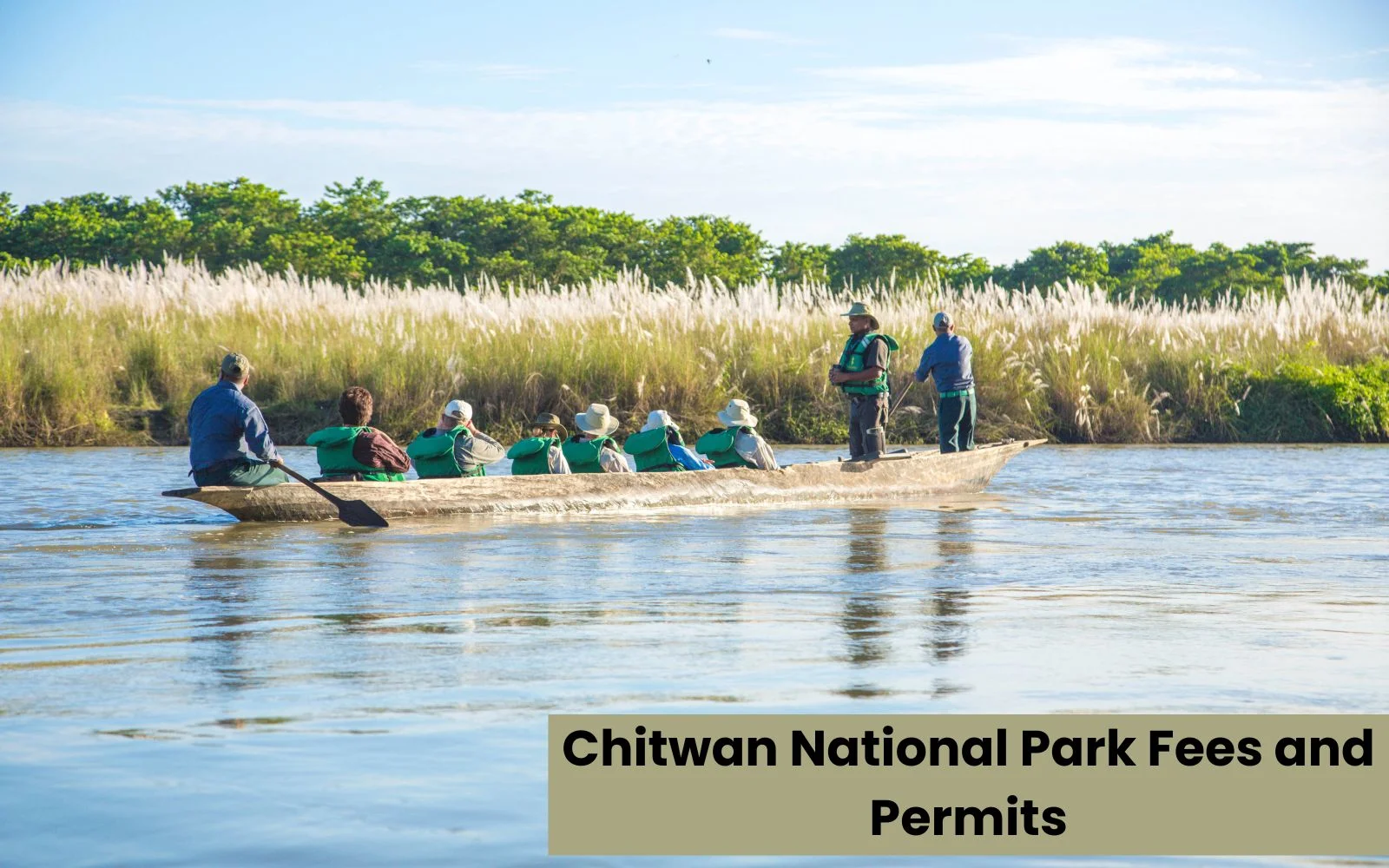
- Canoe Ride: Float down the Rapti River for 45 minutes and watch crocodiles sunbathe on the banks.
- Jungle Walk: A 2–3 hour guided hike perfect for bird watching. Your guide fee is around NPR 500–1,000 extra.
- Elephant Rides: Available but not recommended—jeep safaris are more ethical and give better wildlife views.
Buffer zone activities (no permit needed):
- Tharu cultural tours
- Village walks
- Resort activities
Important rules:
- All activities require a guide (it’s mandatory for safety)
- No multi-day permits—you must buy a new one each day
- Breaking rules can cost NPR 5,000+ in fines
- Drones and plastics are banned
- You cannot stay overnight inside the park (buffer zone resorts only)
These rules keep both visitors and wildlife safe while protecting the environment.
How to Get Your Permit (It’s Easy!)
Getting your Chitwan National Park permit is straightforward:
Option 1: Buy at the gate
- Main gates: Sisdol and Sauraha
- Open: 6 AM to 6 PM
- Process: Show your passport, pay cash, receive your permit
- Takes about 10 minutes
Option 2: Book through Kasara (easier!)
- We handle all permits as part of our packages
- No waiting in lines
- We provide shuttle service from the bus park in Sauraha
- Everything is ready when you arrive
What’s Included in a Typical Chitwan Safari Day
A full safari day typically includes a guided jeep safari through the core zone, a peaceful canoe ride along the Rapti River, and a nature walk led by trained naturalists. When booked as part of a resort package, these experiences are arranged in advance and aligned with the best wildlife viewing times.
Dos and Don’ts in National Park
By following them, you’ll enhance safety, support wildlife protection, and make the most of guided escapades like river floats or village immersions.
Do’s
Get your permit and use expert guides: Pick up your ticket (about NPR 2,260 if you’re from another country) at the gate. Always go with trained guides. They keep you safe and help you find cool animals like gharials (special crocodiles) on boat rides.
Respect nature and local people: Stay far away from wild animals. Throw trash in proper bins. When you visit Tharu villages, wear long sleeves and pants. Ask your guide about local customs.
Pack the right stuff: Wear tan or green clothes (not bright colors). Bring good walking shoes, bug spray, sunscreen, and life jackets for water rides. Bring binoculars to see animals far away. Use refillable water bottles instead of plastic.
Make good choices: Take jeep safaris instead of elephant rides. Stay at eco-friendly places like Kasara. Plan a longer trip so you have more time to enjoy nature.
Be ready: Check park news before you go. Get travel insurance. Visit from October to March when the weather is cool and you’ll see more animals.
Don’t
Don’t bother the animals: Never get too close, feed them, touch them, or take selfies with them. It’s their home, not yours. You’ll pay NPR 5,000 or more if you break this rule.
Don’t make the park dirty: Don’t use plastic bags or bottles. No fires. Don’t buy souvenirs made from plants or animals. This hurts the park.
Don’t go alone or at night: The park is only open 6 AM to 6 PM. You can’t explore without a guide—it’s dangerous. Never touch river water, crocodiles might be there!
Don’t fly drones or hang out of jeeps: This scares the animals. Stay in your seat with your seatbelt on during bumpy jeep rides.
Don’t support things that hurt animals: Don’t ride elephants, it stresses them out. New 2025 rules say watching animals from far away is better.
Start Your Chitwan Adventure with Kasara
Now you know the secret to exploring Chitwan National Park: understanding fees and permits is easier than you thought! Every rupee you spend on the Chitwan National Park entry fee goes toward protecting rhinos, tigers, and hundreds of other species. You’re not just buying a ticket; you’re becoming part of a conservation success story.
But here’s the best part: you don’t have to figure it all out alone. While other travelers scramble at park gates or miss out on the best morning safaris, Kasara Chitwan (formerly known as Kasara Resort) guests wake up to hot coffee, handled permits, and expert guides ready to show you rhinos at sunrise. No stress, no confusion, just pure jungle magic.
If you feel this is a great deal, secure your all-inclusive Chitwan adventure with us and enjoy your Chitwan visit!
Frequently asked questions
Can I use one permit for multiple days?
No, permits are valid for one day only. You need to buy a new one each day you visit.
Can I book permits online?
Not yet. The gates are still the easiest option, or let your resort handle it.
What’s the total cost for one day?
If you’re doing it yourself: NPR 5,000–7,000 per day (entry + one or two activities + guide).
Are guides really required?
Yes, it’s mandatory for all activities in the core zone. Guides know where animals gather and keep you safe.
What if it rains?
No refunds for weather. Plan for backup dates if visiting during monsoon season.