
Maghi Festival: Celebrating the Tharu New Year
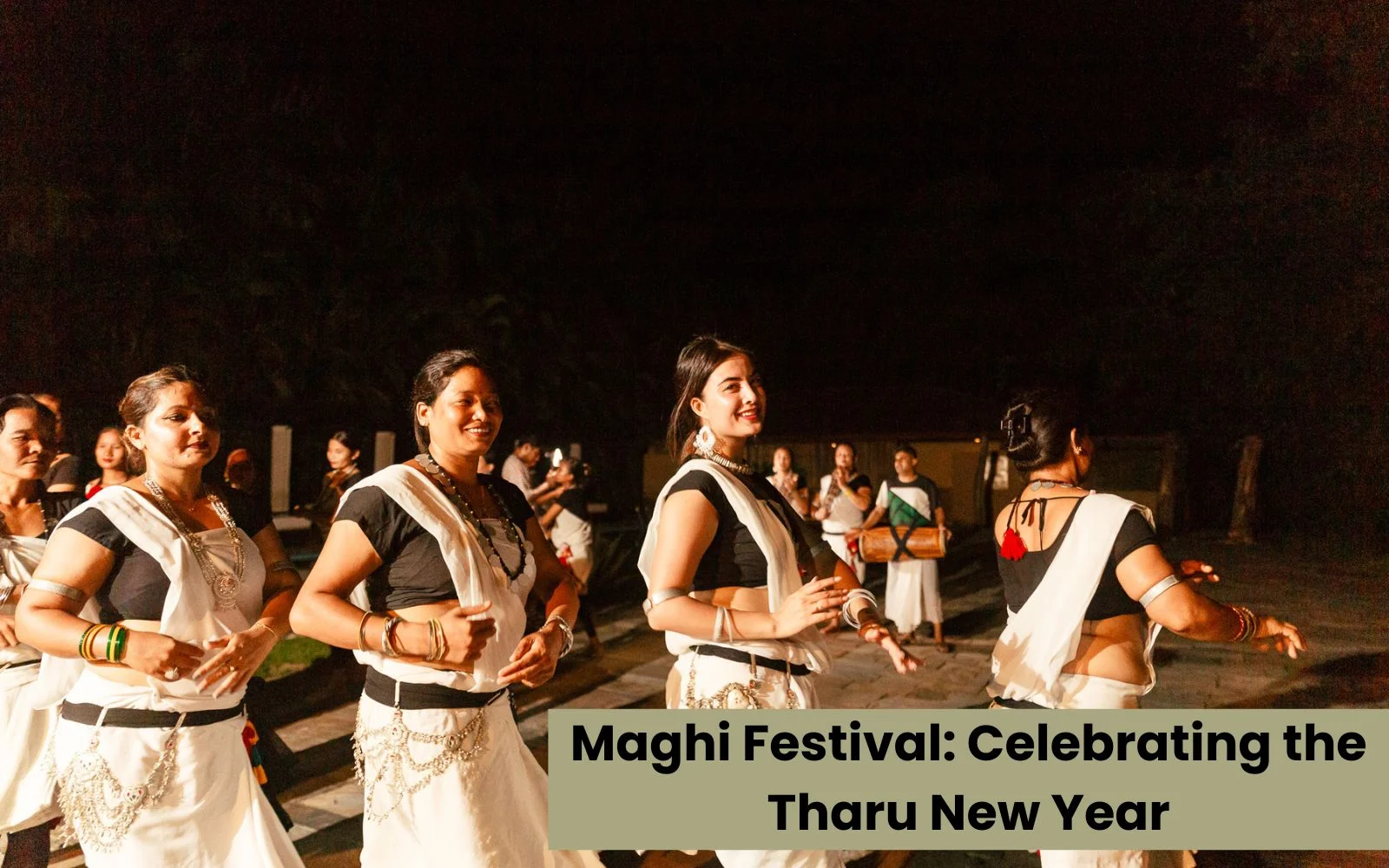
When winter’s chill begins to fade and the sun starts its journey northward, the Tharu community across Nepal bursts into celebration.
This is Maghi, the New Year, a time when ancient traditions come alive through colorful dances, heartfelt gatherings, and the warmth of community bonds.
Unlike the calendar flipping to January 1st that many of us know, the Tharu New Year follows the lunar calendar, falling on the first day of Magh (usually mid-January). But for the Tharu people, this isn’t just another festival. This is a celebration of freedom, identity, and hope for the year ahead.
More Than Just a Festival
Walk into any Tharu village, especially in Chitwan, a day before Maghi, and you’ll see something special that’s going to blow your mind. Families gather for “Chita Marne,” a ritual involving animal sacrifice that marks the beginning of festivities.
As dawn breaks on Maghi morning, entire families head to nearby rivers for a holy bath. Imagine taking a bath in cold winter water. But what they believe is doing so will renew their spirit, and that’s the exact moment when they get connected with nature and their ancestors.
What makes Maghi particularly meaningful is its connection to Maghee Sangrati (also known as Maghe Sankranti), celebrated across Nepal. While other communities observe it differently (Newaris call it Gheu Chaku Sallhu, and Brahmins and Chhetris know it as Makar Sankranti), the Tharu celebration stands out with its unique traditions and deeper cultural significance.
The Colors of Tradition
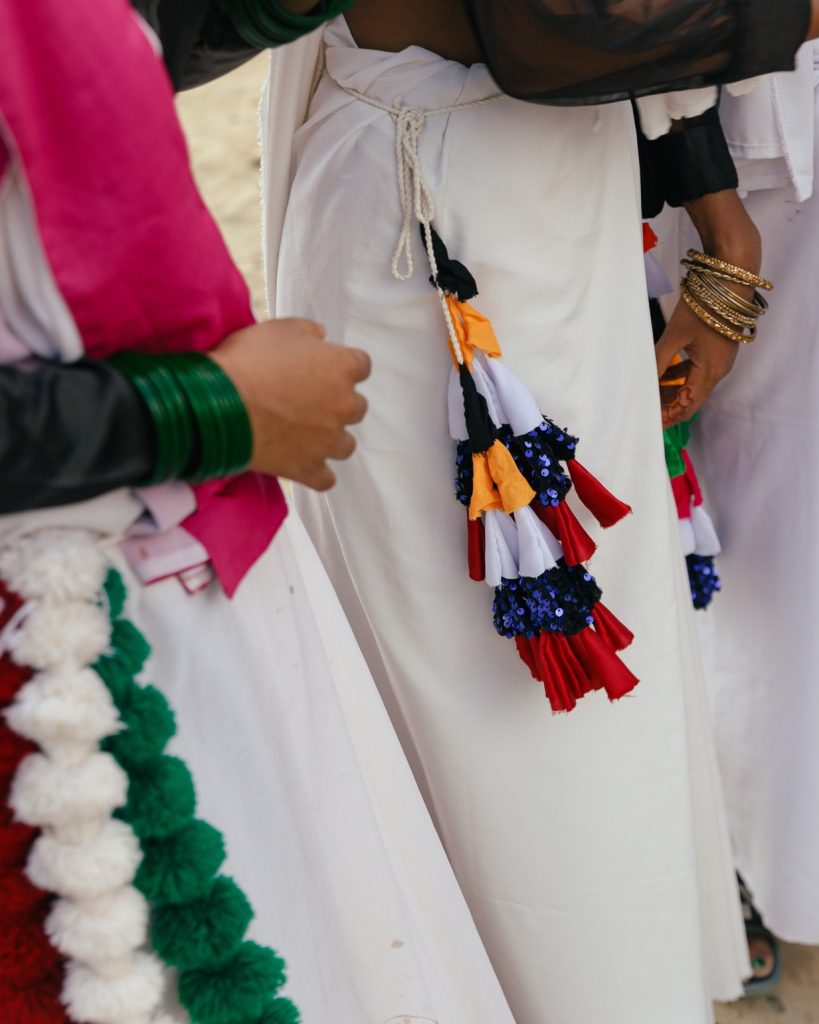
If you ever get a chance to see Maghi celebrations, the first thing that’ll catch your eye is the Tharu traditional dress. Women and girls wear stunning outfits in green and white, and there’s beautiful symbolism behind these colors.
Green represents their deep connection to nature. The Tharu people have always been nature lovers, treating the environment as sacred. White symbolizes peace, reflecting the gentle and harmonious nature of their community. Together, these colors tell a story of who they are.
The silver ornaments they wear aren’t just accessories; they are the representation of the moon, adding another layer of connection to nature and the cosmos. You can see dozens of Tharu women in these traditional outfits during Maghi, moving together in dance, it’s like watching a living painting of cultural pride.
When Sticks Tell Stories
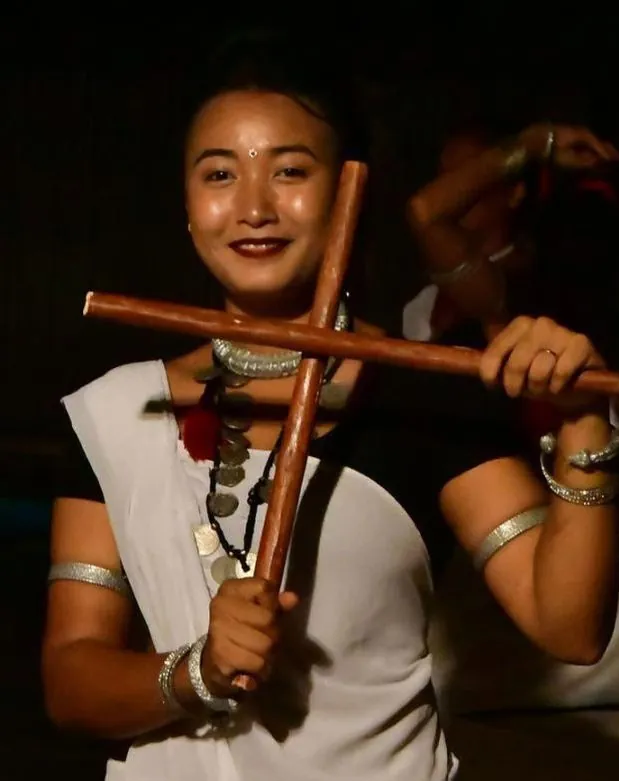
No Maghi celebration is complete without the famous Tharu stick dance. Groups of dancers, both men and women, come together with long sticks, creating rhythmic patterns that echo through villages and city streets alike.
The stick dance isn’t just entertainment; it’s a living tradition passed down through generations. The synchronized movements, the rhythmic clapping of sticks, and the traditional songs that accompany the dance create an atmosphere that’s both joyful and deeply moving. Young people learn these dances from their elders, ensuring that this beautiful art form survives for future generations.
During the Maghi week, you’ll find many new dancers, coming together and going from house to house, performing and collecting money. This is what you’ll love to witness with your eyes.
Flavors of Maghi
Food is at the heart of Maghi celebrations, and the Tharu people prepare special dishes for this occasion. Days before the festival, families soak rice and prepare “Dhikri,” indigenous rice cakes steamed to perfection.
There’s a saying in Tharu communities: “Poush ma pakya, Magh ma khyaka,” which means “cooked in Poush (the previous month), eaten in Magh.”
Different regions have their specialties. In central Nepal, you’ll find “Bageya,” while the Far West is known for “Dhikri.” But the star of the show is “Kichadi,” a special dish made from rice, lentils, and various spices. It’s not just delicious; every ingredient has medicinal properties that help boost immunity during the cold season.
And then there’s “Jad,” homemade liquor prepared from sticky rice. Families are proud of their ability to make Jad, and during Maghi, people visit each other’s homes to compare the quality and flavor of each household’s brew. Everyone tries to serve the most excellent food and beverages, and it turns into a friendly competition.
Life in a Chitwan Tharu Village During Maghi
Experiencing Maghi in a Chitwan Tharu village is something special. There are many Tharu settlements in the area, and during Maghi, these villages become hubs for cultural festivities.
Here’s what a typical Maghi day looks like in these villages: After the morning river bath, male family members gather in the deity room for a special ritual called “Dhoglagne.” Three pots are kept, representing three generations, and men drop handfuls of black lentil, rice, and salt into their respective pots. These will later be gifted to their sisters, a beautiful tradition that honors family bonds.
The village head, called “Mahaton,” plays a crucial role during Maghi. Household heads gather at his house with their homemade liquor, and he asks each person about their plans: who’s building a house, who’s getting married, who needs community help. This helps the village coordinate support for different families throughout the year.
One unique tradition is the “Badhghar” selection, in which community leaders are chosen to guide the village. This democratic practice shows how deeply the Tharu people value collective decision-making and community welfare.
Experience Maghi in Authentic Chitwan
Planning to witness Maghi firsthand? Chitwan’s Tharu villages offer the most authentic experience. Kasara Chitwan provides the perfect base, with easy access to traditional celebrations and village visits.
The resort reflects Tharu architectural influences and arranges cultural programs featuring the famous Tharu stick dance. During Maghi season, enjoy special evenings with community interactions, traditional cuisine, and performances. Kasara blends modern comfort with local culture, offering a peaceful retreat after exploring authentic village festivities.
A Living Tradition
What makes Maghi truly special is how it adapts while preserving its essence. The festival proves that traditions don’t have to be frozen in time to remain meaningful. They can evolve, incorporate new elements, and still carry the values that make them essential.
When Tharu families gather for Maghi today, they’re participating in something that connects them to their ancestors while creating new memories for future generations. The green and white costumes, the rhythmic stick dances, the shared meals, the river baths: each element tells a story of resilience, joy, and cultural pride.
For visitors and outsiders, witnessing Maghi offers a window into a community that has maintained its distinct identity despite centuries of challenges. It’s a reminder that Nepal’s cultural wealth lies not just in its mountains and monuments, but in the living traditions of its diverse communities.
As the Tharu people celebrate their New Year, they’re not just marking time. They’re affirming who they are, honoring where they came from, and expressing hope for where they’re going. That’s what makes Maghi more than a festival. It’s a celebration of life itself.
FAQs
What is the festival of Tharu?
Maghi is the main festival of the Tharu community, celebrated as their New Year. It marks freedom, new beginnings, and cultural identity with traditional dances, special foods, and community gatherings throughout the week.
What is Maghi Sankranti in Tharu culture?
In Tharu culture, Maghe Sankranti is called Maghi and celebrated as New Year. It historically marked the end of labor contracts and now symbolizes freedom, unity, and the start of a new agricultural cycle.
Which God is Maghe Sankranti?
Maghe Sankranti honors the Sun God (Surya) and Lord Vishnu. The festival celebrates the sun’s northward journey, bringing warmth and longer days, which is considered an auspicious time for new beginnings and spiritual activities.
What do they eat in Maghe Sankranti?
Traditional foods include Kichadi (rice and lentils), Dhikri (rice cakes), til ko laddu (sesame sweets), ghee, tarul (yam), and Jad (homemade rice liquor). These warming foods provide energy during cold winter.
What is the name of Tharu dress in Nepali?
Tharu women wear a colorful outfit called “Lahanga” or “Ghagra Choli” with green and white colors. The traditional dress features silver ornaments and reflects their connection to nature and a peaceful cultural identity.