
What to Wear on a Jungle Safari in Chitwan: Colors, Fabrics & Comfort That Actually Matter
Most travelers spend hours researching which safari package to book. Then they show up in bright red t-shirts and flip-flops.
It happens more than you’d think. People overthink the “look” of a safari and underthink the actual experience of being in a jungle for hours. The heat. The humidity. The insects. The long walks.
This guide is different. It focuses on what actually works inside Chitwan’s jungle, not what looks good in a photo. And when you get the packing right, something surprising happens: you spot more wildlife, stay out longer, and enjoy every minute of it.
Table of Contents
Why What You Wear Matters More Than You Think
You’re not stepping onto a film set. You’re walking into real wildlife territory: dense sal forests, tall grasslands, and river edges where one-horned rhinos, Bengal tigers, and crocodiles live freely.
Your clothing affects three things directly:
- Comfort: Wrong fabrics leave you sweaty, itchy, and distracted
- Safety: Exposed skin invites insects, sunburn, and scratches
- Wildlife visibility: The wrong colors can scare animals before you even see them
The right outfit doesn’t just improve your photos. It improves your entire safari experience.
Understanding Chitwan’s Jungle Climate First
Before talking about what to wear, you need to understand where you’re going.
Chitwan sits in Nepal’s subtropical lowlands. It’s hot, humid, and unpredictable. Mornings can feel surprisingly cool, sometimes even chilly during winter months (October to February). By midday, temperatures climb fast, often crossing 30°C in summer.
Monsoon season (June to September) brings heavy rain and thick humidity. Winter is milder and one of the best times to visit for wildlife sighting, but early mornings still require a layer or two.
Once you understand this, your clothing choices become obvious. You’re not packing for one temperature. You’re packing for a full day of changing conditions.
Lightweight fabrics are essential in Chitwan’s humid climate. That’s where everything starts.
Best Colors to Wear on a Jungle Safari
Stick to Earth Tones
Think green, brown, khaki, olive, and beige. These colors let you blend naturally into the jungle surroundings. When you’re quieter and less visible, wildlife tends to stay calm and carry on with their natural behavior. That is exactly what makes for a great sighting.
Neutral colors also have a practical bonus: they show less dirt and work well across all lighting conditions, from misty mornings to bright afternoons.
What to Avoid
- Bright colors like red, orange, yellow, or vibrant blue can startle animals and cause them to retreat
- White looks clean at home but gets dirty within the first 20 minutes on a jungle trail
- Black or very dark colors absorb heat in an already hot climate and are said to attract certain insects
It’s about respecting the wildlife and staying unnoticed in their space. Your guide will likely remind you the night before, but it’s better to already know.
Choosing the Right Fabrics for Comfort
Best Fabrics
The jungle is humid. You will sweat. The goal is to choose fabrics that help your body manage that without making you miserable.
- Cotton is breathable and soft, great for layering or everyday wear
- Linen is even more breathable and stays cool in high heat
- Moisture-wicking blends pull sweat away from your skin and dry fast. Ideal for long walks or jeep safaris in summer
Avoid These
- Heavy denim is stiff, takes forever to dry, and holds heat against your legs
- Thick synthetic fabrics trap heat and can cause skin irritation over long periods
Less sweat means more focus. When you’re not uncomfortable, your attention goes where it should: to the jungle, the sounds, and the animals around you.
Why Full Coverage Is Better Than You Think
This might feel counterintuitive in a hot climate, but long sleeves and full-length pants are almost always the smarter choice on a jungle safari.
Here’s why:
- They protect against insect bites, including mosquitoes that are most active during early morning and evening safaris
- They shield your skin from direct sun exposure during midday activities
- They prevent scratches from dense vegetation during jungle walks
More coverage actually means more comfort, not less. Especially when you pair it with breathable fabrics. A light, long-sleeved cotton shirt feels far better than a bare arm covered in insect bites.
Covered clothing improves both safety and comfort on the trail.
Layering for Early Morning and Evening Safaris
The best wildlife sightings often happen at two times: early morning and late afternoon. Both come with cooler temperatures that can catch unprepared travelers off guard.
A jeep safari starting at 6am in January can feel genuinely cold. By 11am, you’ll want to shed everything you’re wearing.
What to pack for this:
- A light jacket or fleece for early mornings and evening rides
- A breathable base layer that works as a standalone when it heats up
- Items that pack small so they fit easily in a day bag
Layering handles Chitwan’s temperature shifts better than any single outfit can. Think of it as building flexibility into your wardrobe for the day.
Footwear That Works in the Jungle
Footwear is simple: closed shoes only.
Jungle trails are uneven. There are roots, rocks, wet patches, and in some areas, wildlife you’d rather not step near unexpectedly. Good grip matters.
Look for:
- Closed-toe shoes or sneakers with solid grip
- Lightweight hiking shoes for longer walks
- Something broken in already. A jungle walk is not the time to test new shoes
Sandals and open footwear are not suitable for any jungle activity in Chitwan. Comfort always beats style here. Your feet will thank you by hour three of a walking safari.
Dressing for Different Safari Activities
One of the most overlooked parts of safari packing is that different activities call for different clothing.
Jeep Safari
Light layers and sun protection are the priority here. You’ll be seated but exposed to wind, dust, and direct sun. A hat and sunglasses are essential. A light jacket for early morning rides is a good idea.
Jungle Walk
This is where full coverage becomes most important. Long sleeves, long pants, and sturdy closed shoes. You’re moving through vegetation, potentially standing still for long periods, and closer to insects. Your guide will lead, but your clothing should protect you throughout.
Canoe Ride
Light, quick-dry clothing works best. You may get splashed, and the ride is often done in open sunlight on the river. Breathable fabrics and a hat are your friends here.
Each activity has its own demands. Packing one flexible outfit for all three is possible, but understanding the differences helps you make smarter choices.
What Experienced Guides in Chitwan Actually Wear
Watch your local safari guide for five minutes and you’ll learn everything you need to know.
They consistently wear:
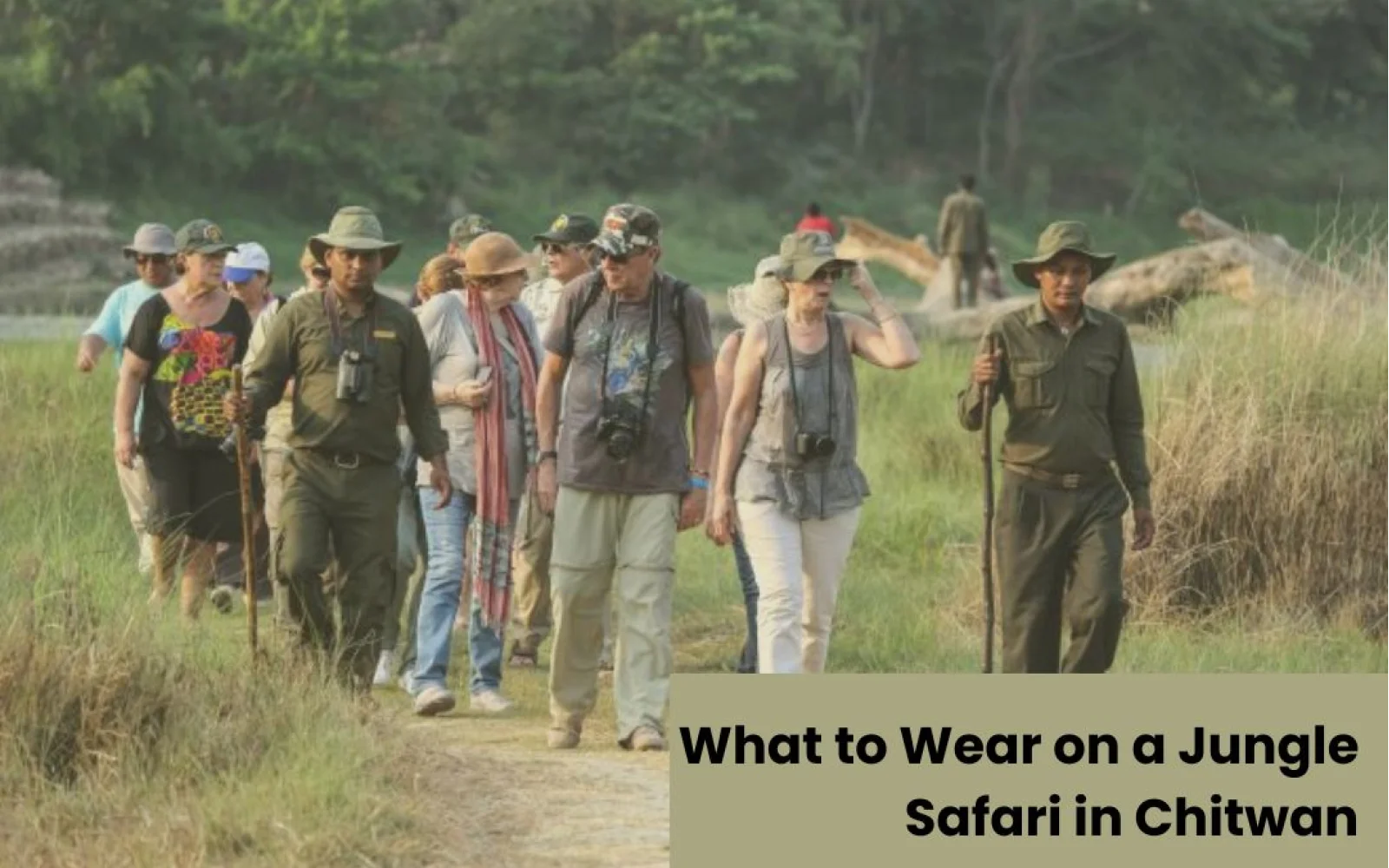
- Neutral-toned shirts in olive, brown, or grey
- Lightweight, full-length trousers
- Practical closed shoes with good grip
There’s no fashion consideration here. These guides work in this jungle every day, and their clothing reflects what genuinely works over long hours in real conditions. Following their lead is the simplest shortcut to getting it right.
Common Clothing Mistakes to Avoid
A few choices consistently make safaris less enjoyable:
- Wearing bright colors: even one bright item can affect wildlife behavior and your group’s experience
- Choosing style over comfort: tight jeans, canvas shoes, or anything that restricts movement or holds heat
- Ignoring layering: showing up in one layer for a full-day safari almost always leads to discomfort
- Wearing open footwear: sandals on jungle trails are a safety issue, not just a comfort one
These mistakes are easy to avoid once you know about them. Now you do.
Conclusion
Your clothing is not just what you wear. It is part of how you experience the jungle.
The right fabrics keep you cool when it’s hot and warm when the morning is cool. The right colors let you move quietly through wildlife territory. The right footwear keeps you comfortable through long walks. All of this adds up to one thing: a better safari.
When you’re not distracted by discomfort, you notice more. You stay longer. You hear the jungle differently. You watch animals behave naturally because you’re not alarming them.
A well-planned safari experience, like those offered at Kasara Chitwan, focuses on exactly this kind of immersion and comfort. What you wear plays a bigger role in that than most travelers expect. Pack smart, and the jungle will reward you for it.
Faqs
1. What colors should you wear on a jungle safari?
Stick to neutral, earthy tones like khaki, green, or beige. These colors help you blend into the surroundings, avoid disturbing wildlife, and stay more practical in dusty jungle conditions.
2. What fabrics are best for a jungle safari in hot weather?
Choose lightweight, breathable fabrics like cotton or moisture-wicking blends. These help manage sweat, keep you cool in humid conditions, and dry quickly during long safari activities.
3. Can you wear shorts on a jungle safari?
Shorts are comfortable but not ideal. Long pants offer better protection against insects, sun exposure, and scratches, especially during jungle walks or off-road safari experiences.
4. What shoes should you wear for a jungle safari?
Wear closed, comfortable shoes with good grip, such as sneakers or light hiking shoes. They protect your feet during walks and provide stability on uneven jungle terrain.
5. Do you need special clothes for a jungle safari?
You don’t need special safari clothing, but smart choices matter. Focus on comfort, neutral colors, breathable fabrics, and protective coverage to enhance your overall safari experience.