
Packing List for Chitwan National Park: The Season-Wise Checklist
Planning a Chitwan trip is exciting, and having a complete packing list for Chitwan tour can make your trip smooth, safe, and memorable.
Chitwan National Park is home to Bengal tigers, one-horned rhinos, elephants, crocodiles, and hundreds of bird species, and offers a wealth of activities. To enjoy every moment of these activities, you need clothes and gear that match the season. Days can be hot, mornings chilly, and sudden rains are common.
This guide provides a comprehensive Chitwan jungle safari packing list, covering summer, winter, and monsoon visits. Whether you’re carrying binoculars for birdwatching or a camera to catch rhinos by the river, you’ll find everything you need for a safe and fun trip.
Why Packing Smart Matters for a Chitwan Tour
Chitwan National Park is a mix of dense forests, open grasslands, and winding rivers. Days can be hot and humid, nights surprisingly cool, and monsoon months bring heavy rain. Add jeep safaris, canoe rides, and walking trails—and suddenly packing right isn’t just about comfort; it makes the whole trip smoother and safer.
The right clothes protect you from mosquitoes and the sun. Good gear keeps you ready for long days outdoors. Packing smart with the right Chitwan safari gear means fewer distractions and a better chance to actually enjoy the rhinos, tigers, and sunsets you came for.
Essential Packing List for Chitwan Trip
Being smart about what you bring on your Chitwan trip can mean the difference between a fun and relaxing trip. Chitwan’s tropical weather, dense forests, and varied activities—from morning safaris to canoe rides—mean you need to be ready for heat, rain, mosquitoes, and long hours outdoors. Here’s a detailed packing checklist for Chitwan National Park to help you prepare.
Clothing Essentials
The weather in Chitwan can swing from hot days to cool mornings, so the right clothes matter. Pack:
- Lightweight, breathable clothes: Pack loose-fitting tops and trousers made from fabrics like cotton and linen. These are comfortable for the warm, humid climate.
- Long-sleeved shirts and trousers: These are crucial for protecting your skin from the intense sun and, most importantly, from mosquitoes and other insects during jungle treks and evenings.
- Neutral colours: For wildlife safaris and walks, opt for neutral and earthy tones like khaki, beige, brown, and olive green. Avoid bright colours like red or white, as they can startle wildlife.
- Sturdy, closed-toe walking shoes: Essential for navigating uneven and potentially muddy terrain in the jungle.
- Sandals or flip-flops: Useful for relaxing at your accommodation or for short, casual walks.
- A hat or cap: A wide-brimmed hat offers excellent protection for your face and neck from the strong midday sun.
- Rain gear: A lightweight, waterproof jacket or poncho is highly recommended due to the unpredictable nature of the weather. (Note: Some accommodations, like Kasara, provide rain gear for safaris.)
Safari Gear
To get the most out of your jungle safari, bring gear that keeps you ready for every sighting and trek:
- Binoculars: This is a top recommendation from all sources. A good pair of binoculars is essential for spotting wildlife from a distance, especially elusive creatures like tigers or birds in the dense jungle. A magnification of 8x or 10x is widely recommended for a good balance of power and a steady image.
- Camera: To capture your memories, a camera is a must. For serious wildlife photographers, a DSLR or mirrorless camera with a powerful telephoto zoom lens (e.g., 200-500mm or 150-600mm) is ideal for getting close-up shots without disturbing the animals. For casual photographers, a compact camera or a smartphone with a good zoom will suffice.
- Daypack or Small Backpack: A lightweight bag is crucial for carrying all your daily essentials during safaris. Look for a waterproof or water-resistant option to protect your gear from sudden downpours, especially during the monsoon season.
- Reusable Water Bottle: Staying hydrated is vital in Chitwan’s hot and humid climate. A reusable bottle helps you reduce plastic waste and ensures you have water on hand during long safaris and walks.
- Insect Repellent: This is a critical item. A repellent with DEET, picaridin, or oil of lemon eucalyptus is highly effective against mosquitoes and other insects.
- Personal First-Aid Kit: While guides will have their own, it’s wise to carry a small personal kit with essentials like plasters, antiseptic wipes, and any personal medications you may need, such as pain relievers or anti-diarrhea tablets.
Recommended Read: Chitwan National Park Fees and Permits: Everything You Need to Know
Personal Care Items
Spending long hours outdoors in Chitwan means taking care of yourself is essential. Make sure to pack:
- Sunscreen, insect repellent, and lip balm to protect your skin from sun and bugs.
- Hand sanitizer and wet wipes for quick hygiene during safaris or village visits.
Electronics & Communication
Staying connected and keeping your devices powered is important, especially in the remote parts of Chitwan. Don’t forget to pack:
- Mobile phone with chargers & necessary adapters
- Power bank for backup if required
- Travel adaptor if you’re coming from abroad
Miscellaneous Essentials
A few extras can make travel smoother and more eco-friendly:
- First aid kit & small waterproof bag for
- Notebook & pen, guidebooks, or maps for exploration
- Snacks & reusable cutlery to cut down on single-use plastics
Season-Wise Packing Checklist for Chitwan Jungle Safari
Packing right for your Chitwan adventure activities depends a lot on the season. The park’s weather shifts from hot and humid summers to chilly mornings in winter, with heavy monsoon rains in between. This shows that Chitwan’s climate is unpredictable, so we need to be prepared for this. Here’s what to carry, month by month.
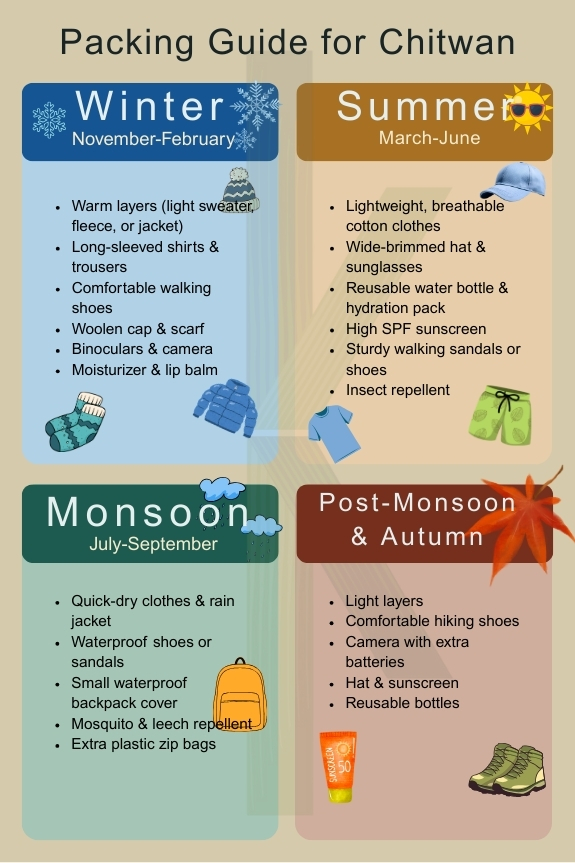
Winter Season (November–February)
Chilly mornings and evenings with mild days make winter one of the best times for a Chitwan jungle safari.
What to Pack for Safari gear:
- Warm layers: Light sweater, fleece, or a jacket for early mornings.
- Long-sleeved shirts & trousers: For sun and mosquito protection.
- Comfortable walking shoes: For treks and safari trails.
- Woolen cap & scarf: Helps during chilly jeep safaris.
- Binoculars & camera: Clear skies give great wildlife photography opportunities
- Moisturizer & lip balm: Cold winds can dry out your skin.
Summer (Mar–Jun)
During hot months, this Summer packing list Chitwan safari ensures you stay cool, hydrated, and protected while spotting wildlife
What to Pack:
- Lightweight, breathable cotton clothes: Keep you cool during safaris.
- Wide-brimmed hat & sunglasses: For strong midday sun.
- Reusable water bottle & hydration pack: Staying hydrated is essential.
- High SPF sunscreen: Protects against sunburn.
- Sturdy walking sandals or shoes: Roads can be dusty and dry.
- Insect repellent: Evenings attract mosquitoes around water areas.
Monsoon Season (July–September)
Although the park is lush due to heavy rains, muddy trails and leeches in wooded parts are also consequences.
Packing list for Chitwan on monsoon:
- Quick-dry clothes & rain jacket: Essential for sudden downpours.
- Waterproof shoes or sandals: Trails can get slippery
- Small waterproof backpack cover: Protects electronics and gear.
- Mosquito & leech repellent: A must for jungle treks.
- Extra plastic zip bags: Keep documents and gadgets dry.
Post-Monsoon & Autumn Season (October)
This is a popular time of year for Chitwan safaris because of the clear skies and comfortable temperatures.
What to Pack for Chitwan safari gear:
- Light layers: Warm mornings, mild afternoons.
- Comfortable hiking shoes: Great for walking safaris.
- Camera with extra batteries: Stunning landscapes after monsoon rains.
- Hat & sunscreen: Midday sun can still be strong.
- Reusable bottles: Keep your travel eco-friendly.
Recommended Reads: Best Time to Visit Chitwan: A Seasonal Guide by Kasara Chitwan
Conclusion
A great Chitwan trip starts with the right packing list, including clothing, mosquito protection, binoculars, cameras, and season-specific gear—to stay comfortable and safe while fully enjoying the wildlife.
For travelers who want adventure with relaxation, staying at Kasara Chitwan puts you right next to the jungle in eco-luxury comfort. You can choose our packages and enjoy easy access to safaris, and some necessary essentials that you need for a Jungle safari.
For more information, please contact us by phone or email to book your stay and make your Chitwan adventure unforgettable!
Recommended Reads: 7 reasons to visit Chitwan National Park
FAQs
What to wear in Chitwan National Park?
Wear lightweight, breathable clothes for hot days, long-sleeved shirts and pants for mosquito protection, and comfortable walking shoes. A hat or cap and a rain jacket/poncho for monsoon season are also recommended.
Do I need malaria tablets for Chitwan National Park?
Yes, it’s wise to take malaria prophylaxis if advised by your doctor, especially during monsoon months when mosquitoes are active.
What color clothes to wear on safari?
Neutral colors like khaki, green, beige, or brown work best. Bright colors can disturb wildlife and attract insects.
How much water should I carry on a safari?
Carry at least 1–2 liters per person per day to stay hydrated, especially during summer or long safari walks.
Can I wear sandals during a jungle safari?
Sandals are okay for short walks or evenings, but sturdy closed-toe shoes are recommended for safaris to protect against uneven terrain, insects, and thorns.