

9 facts about Chitwan National Park
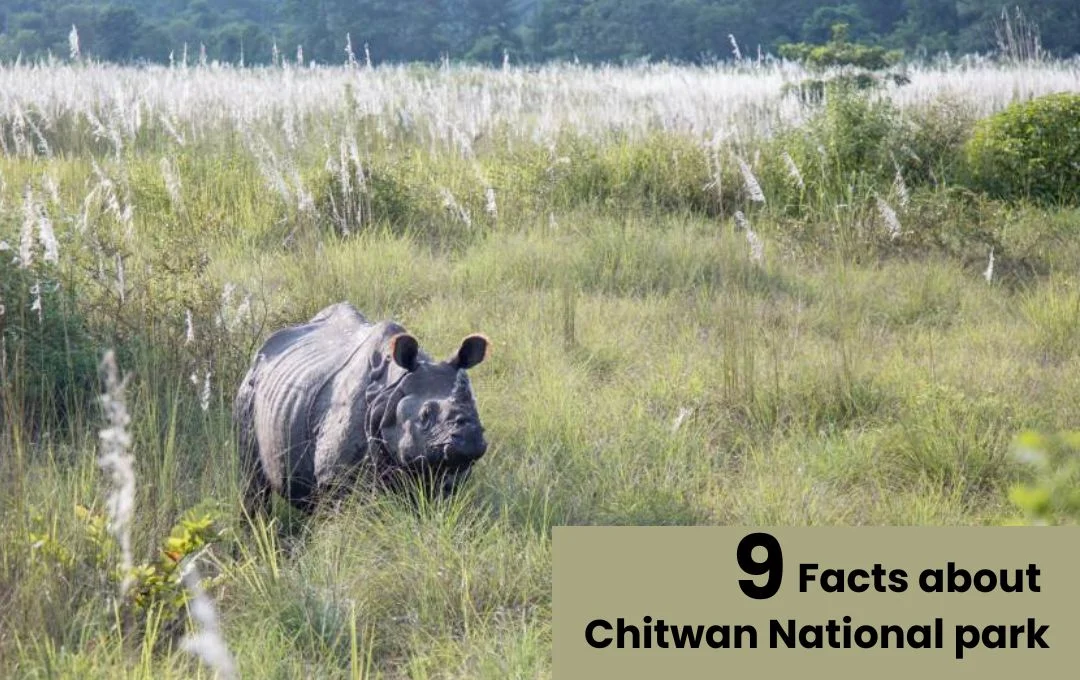
Chitwan National Park, one of the oldest conservation parks located in the south-central part of Nepal. This park is a focal point for its biodiversity, lush landscape, and a success story in rare animal conservation.
It is primarily located in Chitwan, but in reality, it has extended to some portion of Nawalparasi, Parsa, and even the Makwanpur district. Similarly, there are more facts about Chitwan, and in this blog, we cover all of them. Presenting 9 facts about Chitwan National Park.
Top 9 facts about Chitwan National Park
1. Nepal’s First Protected Area
Before it was established as a Conservation area, Chitwan used to be a large, dense jungle, which made it a favourite hunting spot for Nepal’s ruling class — over 2,600 sq. km of jungle used to be home for 800+ rhinos, but later it was cleared by 70% to make a settlement area for people and minimize malaria cases. The Tharu people, the indigenous community who had lived in this jungle for centuries and were naturally immune to malaria, witnessed this transformation firsthand.
In 2029 BS (1973 AD), this park was officially designated as a Conservation area and became the first National park set aside for wildlife protection. But initially, it was not called Chitwan National Park; it was called Royal Chitwan National Park. After 2006, when Nepal became a federal democratic country, the royal title was removed, and the park became Chitwan National Park.
Also Initially, it covered only 544 square kilometers of land, but later increased to 952.63 sq. km.
This area is now open to everyone, but they must obtain a permit and enter the national park in a disciplined manner.
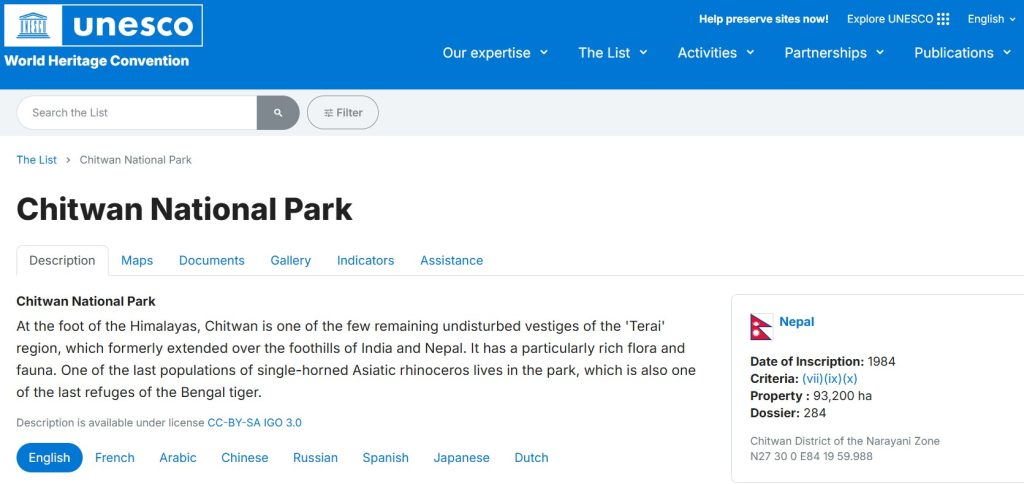
2. UNESCO World Heritage Status
In 1984, Chitwan National Park received a significant award and was designated as a UNESCO World Heritage Site, an organization that protects special places around the world.
Due to the largest wild areas, such as the old river plains from long ago, it has earned a reputation for helping animals grow and stay safe. Tall sal trees and open grasslands make a special destination for wildlife to survive.
When this part got an UNESCO award, it became a blessing for preservation. Many countries help to build safe spots for rangers and fight against bad practices to save their existence. In 2025, UNESCO reviewed the list again and has continued to provide it since then.
3. Born from Conservation Urgency
As mentioned earlier, the Chitwan jungle was poached for human settlements and malaria prevention, which marked a turning point in its establishment as a National Park. As people started to move closer to the jungle, this environment faced growing threats, particularly from animal poaching.
Many animals were on the verge of extinction, especially the Asian rhino. With its unique single horn, it suffered the most, with its numbers dwindling dramatically during the 1950s and 1960s. This rise in human activity makes it all the more urgent for conservation efforts.
With the help of WWF (World Wide Fund for Nature) and other groups, the conservation area was successfully established as a National Park.
4. Biodiversity Hotspot
Chitwan is home to rare and vital wildlife, making it a biodiversity hotspot that plays a crucial role in conservation. A biodiversity hotspot is a special place full of different kinds of plants and animals. The park’s ecosystem includes dense sal forests, open grasslands, lush riverine forests, and rich wetland areas, each supporting different species and natural processes.
These ecosystems create an ideal habitat for wildlife to thrive. Over 700 kinds of animals, including the one-horned rhino and Bengal tigers, live in this park. You may also encounter leopards resting in trees, sloth bears foraging for food, and deer moving through the grasslands. In the rivers and wetlands, gharial crocodiles swim quietly, and occasionally, Gangetic dolphins appear in the Rapti River.
Chitwan is equally important for birdlife, with over 500 bird species recorded. Great hornbills, sarus cranes, and kingfishers are commonly seen during jungle safaris. In winter, migratory birds arrive from distant regions, making it an exceptional destination for birdwatching and wildlife observation.
Recommended reads: Animals to Spot in Chitwan Jungle Safari
5. Sanctuary for the Iconic One-Horned Rhino
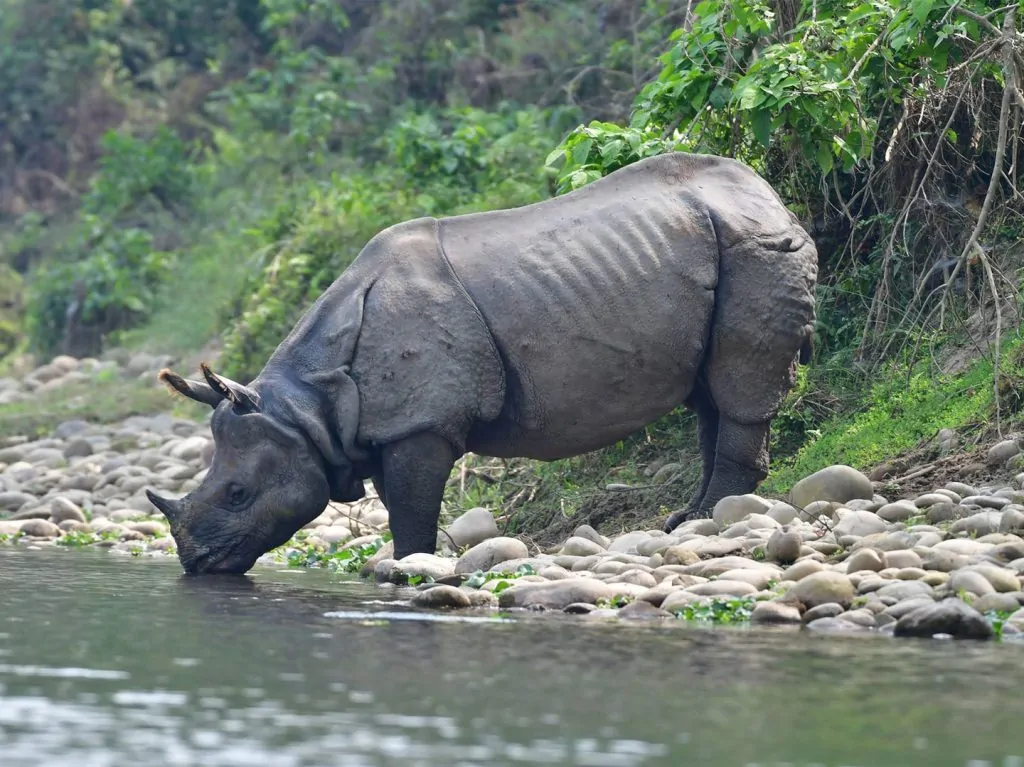
Chitwan National Park is a true sanctuary for the greater one-horned rhino, once on the brink of extinction due to poaching. Today, nearly 90% of Nepal’s rhinos—approximately 694—call the park home, a significant success following efforts to protect them that began in the 1960s.
Rangers employ a range of tactics, from elephant patrols to high-tech cameras, to deter poachers. While the rhinos’ recovery is remarkable, they occasionally wander into nearby villages, causing a stir.
For someone who wants to spot a rhino on their Chitwan visit, consider a jeep safari or a guided walk, offering a rare and unforgettable wildlife experience.
6. Tiger Comeback Story
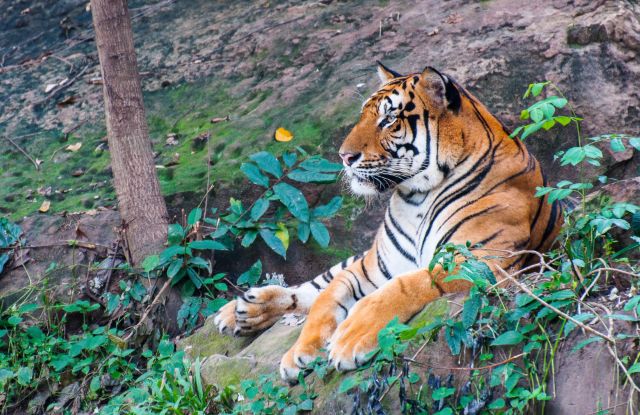
Due to high poaching and habitat loss, tigers were once on the brink of extinction and reduced to just 20-25 individuals by the 1970s. But with the efforts of rangers, scientists and global organizations like WWF, Chitwan National Park became a no-hunting zone in 1973. Different strategies were made to protect them.
Today, their numbers have surged to 128, a 500% increase, thanks to Conservation Assured Tiger Standard (CA|TS) for initiating a conservation program.
Chitwan’s conservation effort also extends beyond its own borders. The park is contiguous with Parsa National Park to the east and India’s Valmiki Tiger Reserve to the south, forming a transboundary Tiger Conservation Unit covering over 3,500 sq. km — one of the largest protected wildlife corridors in South Asia.
As of 2025, sightings of tigers are common, with tourists catching glimpses of these majestic creatures on jeep safaris. Chitwan’s tiger comeback is proof of successful conservation and a symbol of hope for wildlife everywhere.
7. Ramsar Wetland: Beeshhazar Tal’s Hidden Significance
Chitwan National Park features a Beeshazar Tal, which translates to a group of 20,000 lakes. This oxbow lake system encompasses approximately 3,200 hectares of parkland and serves as a natural habitat for various wildlife species, including mammals, birds, and reptiles. This is Nepal’s only Ramsar site, located within the buffer zone of a national park.
Beeshhazar Lake Management Committee, in partnership with the Nepal Government and the Local community, is working together to conserve this wetland and promote sustainable tourism, especially since it was listed on a Ramsar site.
8. Gharial: Chitwan’s Third Flagship Species
Alongside rhinos and tigers, the gharial crocodile is Chitwan’s third flagship species — and one of the most ancient-looking creatures you’ll encounter anywhere in Nepal. Recognizable by their long, slender snouts and prominent nasal knob, gharials were once abundant across South Asian river systems but were pushed to the edge of extinction due to hunting, egg collection, and riverbed degradation.
Chitwan became a critical refuge for their survival. The park established a dedicated Gharial Breeding Center near park headquarters, where eggs are collected, hatched in controlled conditions, and juveniles are raised before being released into the Rapti and Narayani rivers. Since the program began, thousands of gharials have been released back into the wild.
Today, Chitwan’s rivers are one of the last places on earth where you can spot gharials in their natural habitat — a conservation achievement as significant as the rhino and tiger recoveries.
9. Home to the World’s Smallest and Largest Land Mammals
One of Chitwan’s most remarkable and least-known facts is that it shelters two extremes of the mammal world under the same canopy. The park is home to the wild Asian elephant, one of the largest land mammals on earth, and also the Himalayan pygmy shrew — the world’s smallest terrestrial mammal, weighing less than 2 grams.
This extraordinary range reflects just how diverse and layered Chitwan’s ecosystem truly is. From creatures you can hear crashing through the sal forest to ones you’d nearly step over without noticing, the park holds an entire spectrum of life within its 952.63 square kilometers.
The park also hosts a dedicated Elephant Breeding Center and a Vulture Restaurant — a feeding site set up to support the recovery of critically endangered vulture species — making it one of the few places in Asia running active breeding programs for multiple species simultaneously.
Best Time to Visit
The best time to visit Chitwan National Park is from October to March, when the monsoon has passed, leaving crisp air, golden grasslands, and wildlife gathering at waterholes. But, everyone has own preference, that’s why we cover a blog on this topic: Best Time to Visit Chitwan National Park, you can check and decide the best for you!
How to get to Chitwan
Reaching Chitwan is simple, whether you’re coming from Kathmandu or Pokhara. You can travel by tourist bus, private car, or take a short flight to Bharatpur Airport, followed by a short drive to your resort. Road journeys offer scenic views, while flights save time. From Pokhara, the journey is about 160 km and takes 3–6 hours depending on transport choice.
For detailed routes and travel tips, see:
Conclusion
Chitwan National Park packs a lot into one place — history, wildlife, conservation wins, and landscapes that feel untouched. Once you’ve spent time learning its stories and spotting rhinos, tigers, and rare birds, you realise why it’s one of Nepal’s proudest treasures.
And if you want to stay close to the action without losing comfort, Kasara Chitwan, a resort in Chitwan, sits right on the park’s edge and gives you easy access to safaris, quiet mornings, and a calm base after a long day in the Jungle. It’s the kind of spot that lets the Chitwan experience sink in, not rush past.
FAQs
Which is the Oldest National Park in Nepal?
Chitwan National Park is the oldest National Park, established in 1973 in the central part of Nepal.
Where is Chitwan National Park located?
Chitwan National Park is located in south-central Nepal, mainly in Chitwan District, about 150 km from Kathmandu. Kasara Chitwan sits near its buffer zone, offering direct access to jungle safaris.
Why is Chitwan Famous For?
Chitwan is famous for its rich wildlife, especially Bengal tigers and one-horned rhinos, along with jungle safaris, birdwatching, river ecosystems, and diverse tropical forests.
How big is Chitwan National Park?
Chitwan National Park covers 952.63 square kilometers, featuring dense sal forests, open grasslands, wetlands, and river systems that support one of Asia’s most diverse wildlife populations.
When was Chitwan National Park established?
Chitwan National Park was established in 2029 BS (1973 AD) as Nepal’s first national park, created to protect endangered wildlife and preserve the region’s unique Terai ecosystem.
Which river flows in Chitwan?
The East Rapti River flows gently through Chitwan, shaping quiet floodplains where crocodiles sunbathe, birds gather, and canoes glide at a slow, peaceful pace.
Are there tigers in Chitwan?
Yes, Chitwan is home to around 128 Bengal tigers, and spotting one on a safari is easily one of the park’s biggest adventures.
What is the local language in Chitwan?
Tharu is widely spoken in Chitwan, alongside Nepali, giving the region a warm mix of local culture, stories, and everyday conversation.
What is the total area of Chitwan National Park in square kilometers?
Chitwan National Park spans 952.63 square kilometers, making it one of Nepal’s largest and most diverse wildlife habitats.